Gentle exercises for aging dogs
by admin in Pet Care Basics 143 - Last Update November 19, 2025
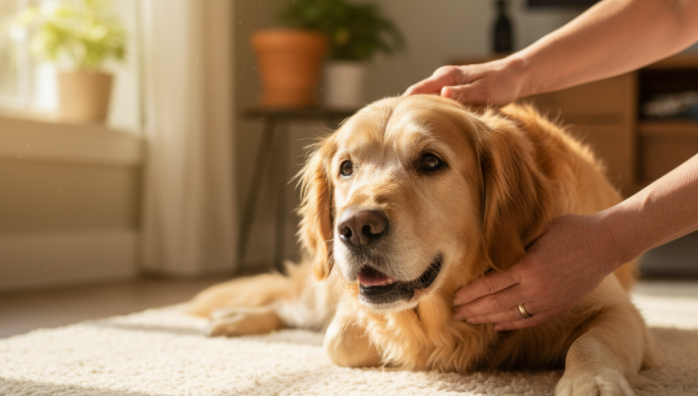
Watching my best friend slow down has been one of the hardest parts of being a dog owner. I remember the day I realized our long hikes were a thing of the past. He’d start lagging behind, and the next day he\'d be so stiff. My heart ached, and I worried that keeping him still was the only way to prevent pain. But I\'ve since learned that the complete opposite is true. Gentle, consistent movement is one of the greatest gifts we can give our aging companions.
Why movement is still crucial for senior dogs
It took a thoughtful conversation with my veterinarian to really understand this. Inactivity can actually make things worse. Muscles weaken, joints get stiffer, and weight gain can put even more strain on their bodies. From my experience, the right kind of exercise does more than just manage physical symptoms. It keeps their minds sharp and their spirits bright. That little tail wag when I grab the leash for a short, slow stroll around the block is proof enough for me. It’s about maintaining their quality of life, not just their physical health.
My favorite gentle exercises for my old friend
Finding the right balance was a process of trial and error, always with my vet\'s guidance. These are the simple, low-impact activities that have worked wonders for us and kept my dog comfortable and engaged.
Short, slow, and scenic walks
We\'ve traded our marathon treks for what I call \'sniffaris\'. We go for 10-15 minute walks, two or three times a day. We let him set the pace, which is often very slow with lots of breaks to sniff and observe the world. I also try to stick to softer surfaces like grass or dirt paths to be kinder to his joints, avoiding hard pavement whenever we can.
Indoor \'cavaletti\' courses
This sounds fancier than it is! On rainy days, I create a simple obstacle course in the living room. I\'ll lay a few pillows or a rolled-up blanket on the floor and encourage him to slowly and deliberately step over them. It\'s a fantastic way to improve his body awareness and maintain joint flexibility without any high-impact stress. It\'s more of a gentle puzzle than a workout.
Gentle range-of-motion exercises
After a good chat and demonstration from our vet, I learned how to perform some simple passive range-of-motion (PROM) exercises. While my dog is lying down and relaxed, I gently support his leg and move it through its natural range of motion, like a slow bicycle pedal. It\'s important to never force anything. This is just about gently reminding the joints what they can do. I strongly recommend asking your vet or a certified canine rehabilitation therapist to show you the proper technique first.
Low-impact water work
If you have access to a safe body of water or a canine hydrotherapy center, it\'s an incredible option. The buoyancy of the water supports their weight, taking all the pressure off their achy joints while allowing them to move and build muscle. My dog isn\'t a huge swimmer, but even just wading in shallow water has made a noticeable difference in his mobility.
Signs to watch for and when to stop
The most important part of exercising a senior dog is being their advocate. I\'ve learned to watch my dog like a hawk for any signs of discomfort. If I notice heavy panting, lagging far behind, limping, a reluctance to move, or any whimpering, we stop immediately. The goal is gentle stimulation, not endurance. Less is always more with our golden-aged friends.