Compostable Poop Bags for Sustainable Walks
by admin in Pet Care Basics 129 - Last Update November 27, 2025
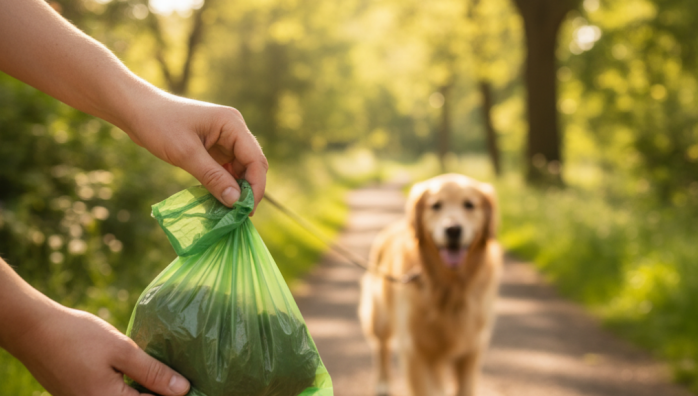
Every time I headed out for a walk with my dog, I felt a little pang of guilt. I was enjoying nature, but the plastic bag in my hand felt like a contradiction. For years, I just accepted it as a necessary evil of responsible pet ownership. I tried some bags labeled \'biodegradable\' and felt a bit better, but a nagging question remained: was I actually making a difference? It turns out, my gut feeling was right, and it sent me down a rabbit hole of research that completely changed this small, daily ritual.
My \'aha\' moment: understanding compostable vs. biodegradable
Honestly, I used these terms interchangeably for a long time. I assumed \'biodegradable\' meant it would vanish harmlessly into the earth. The reality was a bit of a shock. I learned that many products labeled \'biodegradable\' simply break down into smaller and smaller pieces of plastic, or microplastics, which can persist in the environment for centuries. They don\'t truly return to nature.
Compostable, on the other hand, is a regulated term. For a bag to be certified compostable, it has to break down completely into natural elements like water, carbon dioxide, and biomass within a specific timeframe and under specific conditions. It\'s designed to become part of the soil again, just like a banana peel. This distinction was the key for me; I wasn\'t just looking to break plastic apart, I was looking for something that could return to the earth.
Why making the switch felt so important
Once I understood the difference, the choice was easy. Switching to certified compostable poop bags felt like a genuine step towards aligning my daily actions with my values. It\'s a small change, but when you consider how many bags a single dog owner uses in a year, it adds up to a significant reduction in plastic waste.
Here are the key things I learned to look for:
- Third-party certifications: This is non-negotiable for me now. In the US, I look for the BPI (Biodegradable Products Institute) logo. In Europe, the TÜV AUSTRIA \'OK compost HOME\' or \'OK compost INDUSTRIAL\' seedling logo is the gold standard. These logos mean the bags have been scientifically tested and proven to break down as promised.
- Material: Most certified compostable bags are made from plant-based materials like cornstarch (PLA) and other biopolymers. They feel a bit different from plastic—often softer and silkier—but I\'ve found them to be incredibly strong and leak-proof.
A few practical considerations for using them correctly
The biggest lesson I learned is that the bag is only half the battle; how you dispose of it is just as important. Tossing a compostable bag into a landfill bin pretty much defeats the purpose. Landfills are packed so tightly that they lack the oxygen needed for the composting process to happen. The bag will likely be preserved, mummified along with its contents.
So, the ideal way to dispose of them is through a municipal or commercial composting facility that accepts pet waste. This can be the trickiest part. I had to do some research to find out what services were available in my area. Not all facilities accept it, so a quick call or a search on your local council\'s website is essential. It\'s an extra step, but for me, it\'s what makes the entire process truly sustainable.
This journey from plastic to plant-based has made my daily walks feel more mindful. It’s a simple swap, but it’s a powerful reminder that even our smallest choices can contribute to a healthier planet for us and our beloved pets to enjoy.