Choosing Sustainable Pet Food Options
by admin in Pet Care Basics 97 - Last Update November 27, 2025
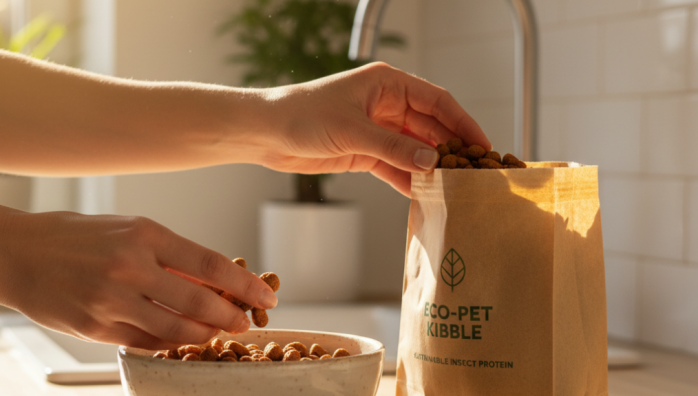
I used to stand in the pet food aisle completely overwhelmed, usually just grabbing the biggest bag of kibble on sale. For years, I never gave a second thought to where the ingredients came from or what happened to the giant plastic bag afterward. My focus was purely on my pet\'s health. But as I started making more conscious choices in my own life, I had an \'aha\' moment: my pet\'s carbon paw-print was a significant part of my household\'s environmental impact. It was time to find a better way that was good for my furry friend and the planet.
What \'sustainable\' really means for pet food
The term \'sustainable\' gets thrown around a lot, and honestly, it can be confusing. It’s not just one thing. After diving deep into this, I’ve learned to look at it as a combination of factors. It’s about the entire lifecycle of the food, from farm to bowl. Here’s what I now look for:
- Ingredient Sourcing: Are the proteins from humanely raised, free-range animals? Is the fish certified by a body like the Marine Stewardship Council (MSC)? Are the ingredients sourced locally to reduce food miles?
- Protein Type: This was the biggest eye-opener for me. Traditional proteins like beef have a massive environmental footprint. I\'ve started exploring foods based on novel proteins with a much lower impact.
- Packaging: Is the bag recyclable or made from recycled materials? Many brands are now using mono-material bags (made from one type of plastic) which are easier to recycle than the common multi-layered foil bags.
- Company Ethics: Does the company have transparent manufacturing processes? Do they invest in carbon-offsetting programs or use renewable energy in their facilities?
My journey with eco-friendly protein sources
Let\'s be real, the idea of feeding my dog food made from insects was strange at first. I was skeptical. But the more I researched, the more it made sense. Insect protein, like from black soldier fly larvae, requires a fraction of the land, water, and feed compared to traditional livestock. It\'s also a high-quality, hypoallergenic protein source. I decided to try a small bag, mixing it in with his old food. To my surprise, he absolutely loved it. We\'ve also explored options like silver carp, an invasive fish species in the US, which helps restore native ecosystems while providing great nutrition. It’s about thinking outside the box of chicken and beef.
Decoding the packaging puzzle
Pet food packaging is one of the trickiest parts of this puzzle. For a long time, I was guilty of \'wish-cycling\' – tossing those shiny, multi-layered bags into the recycling bin hoping for the best. Unfortunately, most of them can\'t be processed. My rule of thumb now is to favor simplicity. I look for brands that use paper bags with a thin lining or those clearly marked with a #1 or #2 recycling symbol. Some smaller, forward-thinking companies even partner with programs like TerraCycle to take back and properly recycle their packaging, which I think is a fantastic initiative.
How to make the switch without drama
Introducing any new food requires a gentle approach to avoid upsetting your pet’s stomach. A sudden change can lead to digestive issues, and that\'s the last thing any of us want. My method is a slow transition over 7-10 days. I start by mixing just 25% of the new food with 75% of the old, gradually increasing the new food\'s ratio every couple of days until we\'re at 100%. Of course, this is just what has worked for my pets. I always recommend having a quick chat with your veterinarian before making any significant dietary changes, especially if your pet has known food sensitivities or health conditions. Their guidance is invaluable.