Sustainable Pet Food Options and Packaging
by admin in Pet Care Basics 103 - Last Update November 26, 2025
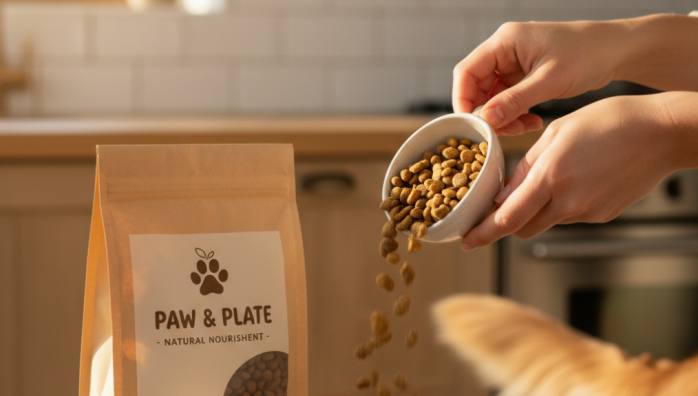
I had a moment of clarity, or maybe guilt, standing over my recycling bin a few months ago. It was overflowing with large, glossy, and very empty pet food bags. For all my efforts to reduce waste in my own life, I realized I’d completely overlooked my pets’ carbon pawprint. It sent me down a deep research rabbit hole, and I discovered that making more sustainable choices for them is complex, but absolutely achievable. It\'s not about being perfect, but about taking small, conscious steps.
What makes pet food sustainable?
Honestly, I used to think \'sustainable\' was just another marketing buzzword. But when you break it down, it\'s really about two key things: the ingredients inside the bag and the journey they took to get there. It’s a shift from just asking “what’s in it?” to “where did it come from and at what cost to the planet?”
Sustainably sourced ingredients
The protein source is the biggest factor here. Traditional livestock farming has a massive environmental footprint. I was amazed to learn about alternatives. Insect protein, for example, from sources like black soldier fly larvae, uses a fraction of the land and water compared to beef or chicken. I was skeptical at first, but my dog transitioned to a kibble with it and he absolutely loves it. Other great options include MSC-certified fish, ethically raised poultry, and even some well-formulated plant-based diets. As with any diet change, this is something I\'d absolutely recommend discussing with your vet to ensure it meets your pet\'s specific nutritional needs.
The impact of local sourcing
This was a simple but powerful realization for me. The fewer miles food has to travel, the smaller its carbon footprint. I started actively looking for brands that source their ingredients and produce their food regionally. It’s not always easy to find this information, but many smaller, thoughtful companies are proud to display it on their packaging or website. It feels good to support local economies while also reducing environmental impact.
Decoding eco-friendly packaging
This was, by far, the most confusing part of my journey. A green leaf on a bag doesn\'t automatically mean it\'s good for the earth. I learned to look past the marketing and understand what the labels really mean.
- Recyclable Materials: Many brands are moving to mono-material plastic bags (like #2 or #4 plastics) which are easier to recycle. However, a huge caveat I discovered is that you must \'check locally.\' Many curbside programs don\'t accept these soft plastics, so I have to take mine to a special store drop-off point.
- Compostable Packaging: This sounds amazing, but it often requires industrial composting facilities, which aren\'t available everywhere. It’s not something you can typically throw in your backyard compost heap.
- Bulk Buying: For dry food, buying the largest bag possible has been my simplest and most effective strategy. It drastically reduces the amount of packaging waste I produce over time, as long as I can store it properly to maintain freshness.
- Terracycle Programs: Some brands partner with services that recycle their specific, hard-to-recycle packaging for free. It takes a little effort to collect and mail the bags, but it\'s a fantastic option to ensure zero waste.
Making the switch: my practical tips
Switching your pet\'s food, especially to a new protein source, can\'t be done overnight. I learned the hard way with a previous dog that a sudden change can lead to an upset stomach. My vet gave me a simple transition plan that has worked perfectly ever since.
- Start Slow: Begin by mixing a tiny amount of the new food (about 10-25%) with their old food.
- Observe and Adjust: Watch for any digestive upset. I do this for 2-3 days before increasing the ratio.
- Gradually Increase: If all is well, slowly increase the amount of new food and decrease the old food over 7-10 days.
- Full Transition: By the end of the period, you should be feeding 100% of the new, more sustainable food.
Every pet is different, so this timeline might need adjusting. It\'s a journey of making better choices, one meal and one bag at a time. It feels incredible to know I\'m not just nourishing my best friend, but also doing my small part to care for the planet we both love to explore.