Overcoming Procrastination Through Behavioral Nudges
by admin in Productivity & Tools 131 - Last Update December 5, 2025
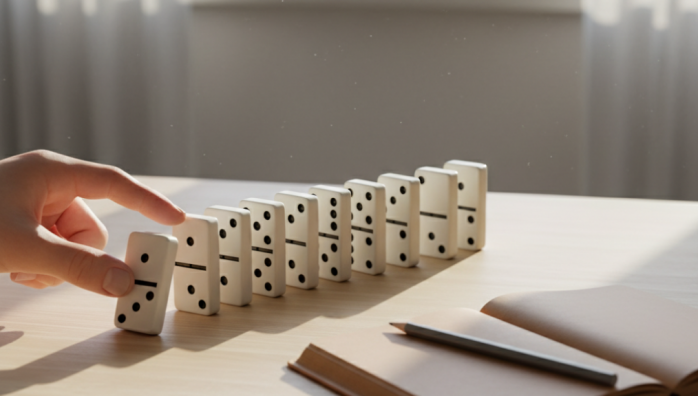
For years, I fought a losing battle with procrastination. I’d read all the books, tried all the apps, and filled countless notebooks with ambitious plans. Each Sunday, I’d feel a surge of motivation, convinced *this* would be the week I finally stayed on top of everything. By Wednesday, I was back to my old ways, feeling a familiar mix of frustration and guilt. My strategy was always the same: more willpower, more discipline, more brute force. It never worked long-term.
It was only when I stumbled upon the world of behavioral science that I had a crucial realization. The problem wasn\'t my lack of willpower; it was my strategy. I was trying to push a boulder uphill instead of finding a gentler slope. That\'s when I discovered the power of \'nudges\'—small, subtle changes that guide you toward better choices without force.
Understanding the \'why\' behind the wait
Before I could fix the problem, I had to be honest with myself about its cause. I eventually accepted that procrastination wasn\'t about being lazy. For me, it was often a defense mechanism. Sometimes it was fear of not doing a task perfectly; other times it was simply being overwhelmed by the sheer size of a project. My brain wasn\'t being lazy; it was trying to avoid discomfort. This shift in perspective was a game-changer. Instead of punishing myself for delaying, I started asking, \'What\'s the friction here, and how can I reduce it?\'
The real enemy is starting
I noticed a pattern: the hardest part of any task was always just getting started. The mental energy required to begin felt monumental. Once I was a few minutes in, the momentum would often carry me. This is precisely where behavioral nudges have become my secret weapon. They aren\'t about completing the whole task; they\'re about making it ridiculously easy to start.
My favorite behavioral nudges in practice
Theory is great, but practical application is what matters. Over the last year, I’ve embedded a few simple nudges into my daily life, and the cumulative effect has been profound. These aren\'t complex systems; they are tiny, almost invisible adjustments.
Environment design as a default
My biggest weakness was my phone. The mere sight of it would trigger the impulse to check for notifications. The solution wasn\'t a Herculean effort of self-control. The nudge was simple: when I work, my phone now lives in a drawer in another room. The small amount of friction—having to physically get up and walk to get it—is usually enough to stop the mindless impulse. I\'ve applied the same logic digitally, removing social media shortcuts from my browser\'s toolbar. Out of sight, out of mind.
The two-minute rule for momentum
This is probably the most effective nudge I’ve adopted. If a task appears on my radar and I know it will take less than two minutes to complete, I do it immediately. Replying to a quick email, putting a dish in the dishwasher, confirming an appointment. These aren\'t huge wins, but they prevent small things from piling up and creating a sense of overwhelm. Each completed micro-task provides a tiny dopamine hit that builds momentum for bigger projects.
Temptation bundling to sweeten the deal
There are still tasks I genuinely dread. For me, it\'s processing expense reports. To overcome this, I use a technique called \'temptation bundling.\' I pair the unpleasant task with something I enjoy. I only allow myself to listen to my favorite a-list podcast while I\'m sorting through receipts and spreadsheets. My brain now associates this chore with a rewarding experience, which has dramatically lowered my resistance to starting it.
Why this works better than brute force
Looking back, my old approach was about fighting my own human nature. I was demanding constant, high-level focus and discipline, which is simply unsustainable. Behavioral nudges work because they operate in the background. They gently steer my path of least resistance toward productive actions. I\'m not trying to be a productivity robot anymore. Instead, I’ve become a thoughtful architect of my own environment, making the right choices the easiest choices. The mental energy I\'ve saved is staggering, and ironically, I get more done with far less stress.