Acupuncture Benefits for Senior Pet Joints
by admin in Pet Care Basics 112 - Last Update November 30, 2025
Watching my old golden retriever, Leo, struggle to get up from his bed each morning was a daily heartbreak. The happy-go-lucky friend I\'d known for over a decade was stiff, sore, and losing his spark. We were managing his arthritis with medication from our vet, which helped, but I felt there had to be something more I could do to improve his quality of life. That’s when a friend mentioned veterinary acupuncture. Honestly, my first thought was, \'Needles? For my dog? No way.\' I couldn\'t imagine him sitting still for that.
My initial skepticism and what changed my mind
I pictured a stressful, painful experience. But the more I researched, the more I saw testimonials from owners just like me. They talked about seeing their senior pets regain a bit of their youthful energy. My vet, who I trust implicitly, explained that veterinary acupuncture is performed by trained professionals and that the needles are incredibly fine—nothing like the ones we\'re used to for injections. He assured me most animals find it deeply relaxing. That trust, combined with my desire to help Leo, made me decide to give it a try. It felt like a responsible step in exploring all our options for his comfort.
What a vet acupuncture session actually looks like
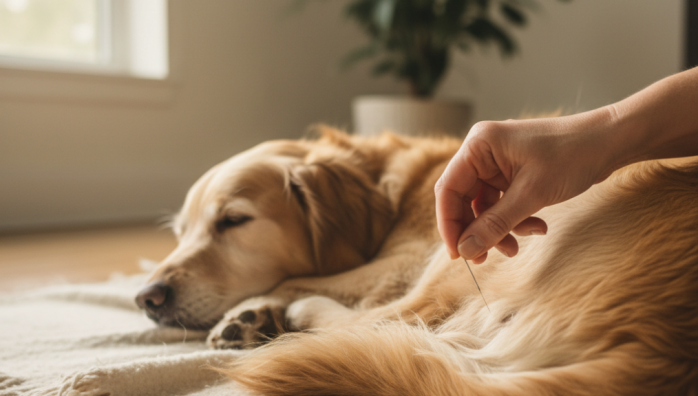
Our first session was surprisingly calm. The practitioner created a serene environment with a comfy mat on the floor. She let Leo sniff everything and get comfortable before she even brought out the needles. She spoke in a soft voice, and her movements were slow and deliberate. The needles were hair-thin, and when she placed the first one, Leo barely flinched. Within a few minutes, with several needles in place along his spine and hips, he let out a big sigh and rested his head on his paws. He was completely relaxed, and so was I. The session lasted about 25 minutes, and it was nothing like the scary scenario I had imagined.
The simple science behind the ancient practice
I learned that from a scientific perspective, acupuncture works by stimulating specific points on the body. This stimulation can trigger a few key responses:
- Release of endorphins: These are the body\'s natural painkillers. It’s why Leo felt so relaxed during and after the session.
- Increased blood flow: Improving circulation to stiff, arthritic joints can help reduce inflammation and promote healing.
- Nerve stimulation: It can help block pain signals from reaching the brain.
It’s a way of encouraging the body to heal and regulate itself, which made perfect sense to me as part of a holistic approach to his care.
The real-world changes I saw in my dog
I was told not to expect a miracle overnight, but after his third weekly session, I started noticing real changes. He was a little less hesitant to use the stairs. He began greeting me at the door again with a proper tail wag, not just a sleepy thump-thump from his bed. He wasn\'t a puppy again, of course, but the spark in his eyes was brighter. For me, that was everything. It wasn\'t a cure for his arthritis, but it was an incredible tool for managing his pain and improving his day-to-day happiness. While this was our experience, every pet is different, so I always recommend having a thorough discussion with your own veterinarian to see if it’s a good fit for your companion\'s specific needs.