Why I Ditched My To-Do List App for a Simple Notebook
by admin in Productivity & Tools 132 - Last Update November 27, 2025
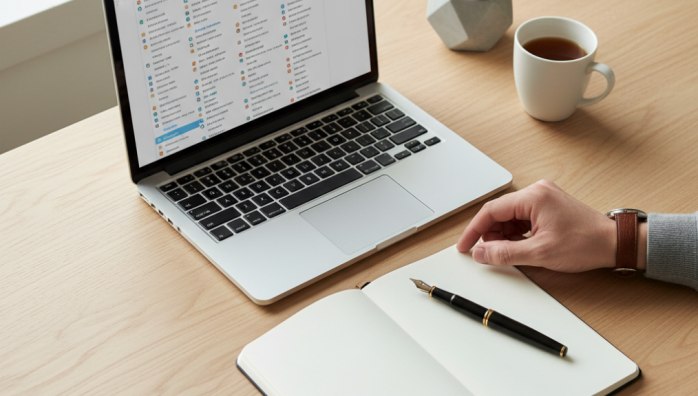
I used to be a digital productivity addict. My phone was a graveyard of abandoned to-do list apps, each one promising a revolutionary way to organize my life. I had projects, sub-tasks, labels, priority flags, and custom-colored categories. From the outside, it looked like a model of efficiency. On the inside, I felt like I was drowning in digital confetti, constantly managing my task manager instead of managing my tasks.
Honestly, the whole system was fragile. A missed sync could derail my morning. A barrage of notifications would shatter my focus. I was busy, yes, but was I productive? I had this nagging feeling that the complexity of the tool was creating the illusion of progress.
The paradox of infinite features
I fell into a classic trap: believing that more features would equal more productivity. The problem was, every new feature was another decision to make. Should this be a P1 or P2 priority? Does it belong to the \'Work\' or \'Deep Work\' project? This constant micro-management drained my cognitive energy before I even started the actual task. I spent more time curating the perfect list than I did checking things off of it. It was a sophisticated form of procrastination, and I knew something had to change.
My turning point: embracing intentional friction
The \'aha\' moment wasn\'t glamorous. It came one frustrating afternoon when my app wouldn\'t sync between my laptop and phone, causing me to miss an important follow-up. In that moment of frustration, I grabbed a cheap legal pad and a pen and scribbled down the three things that absolutely had to get done. That was it. No apps, no syncing, no fuss.
The clarity was immediate. The act of physically writing something down—the intentional friction—forced me to be more deliberate. You can\'t endlessly drag-and-drop or recategorize a task on paper without making a mess. You have to think first. This simple limitation became my greatest asset.
How I make my simple notebook system work
My analog system is intentionally basic. It’s not a complex bullet journal with artistic layouts; it\'s a functional tool designed to get out of my way.
The daily \'top 3\'
Each morning, I take five minutes to identify the three most important things I need to accomplish that day. These are the tasks that will move the needle. They go at the top of a fresh page. Everything else is secondary. This practice alone has revolutionized my ability to focus on what matters.
The psychological power of the strikethrough
Let me tell you, no digital checkbox or celebratory animation comes close to the satisfaction of drawing a thick, decisive line through a completed task. It’s a tangible, visceral signal to your brain that you’ve accomplished something. It’s a small, physical reward that keeps the momentum going.
It’s a thinking tool, not just a list
My notebook has become more than a to-do list; it’s a space for thinking. I can sketch out ideas in the margins, connect tasks with arrows, and add notes without having to find the right menu option. It\'s messy, it\'s human, and it mirrors the non-linear way my brain actually works.
I haven’t sworn off technology entirely, of course. I still use a digital calendar for appointments and collaborative tools for team projects. But for managing my personal focus and daily priorities, I’ve found that the humble notebook isn’t a step backward—it’s a powerful leap toward clarity and genuine productivity.