Understanding Limited Ingredient Pet Diets
by admin in Pet Care Basics 135 - Last Update December 4, 2025
I remember the frustration so clearly. My rescue dog, a sweet terrier mix, was constantly itching. We\'d go through cycles of upset stomachs, ear issues, and that relentless scratching. I felt like I was failing him. I tried different brands, proteins, grain-free options... you name it. The ingredient lists on pet food bags felt like reading a chemistry textbook, and I was completely overwhelmed.
What a limited ingredient diet actually is
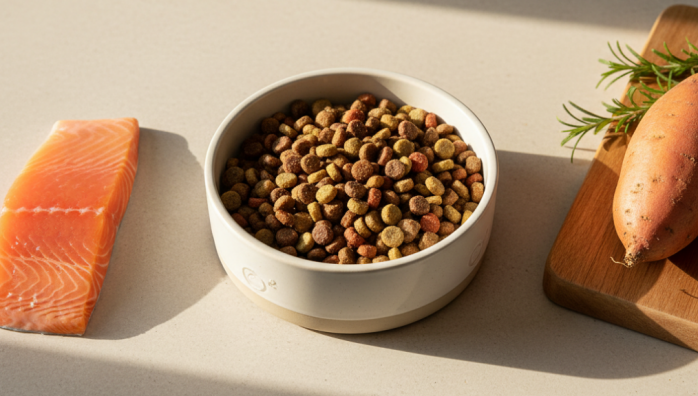
It was during a late-night research session that I stumbled upon the concept of Limited Ingredient Diets (LIDs). The idea, I learned, isn\'t about fancy, exotic ingredients. It\'s about simplicity. An LID is formulated with a single source of animal protein (like lamb or duck) and a single source of carbohydrate (like sweet potato or peas), along with the necessary vitamins and minerals. The goal is to reduce the number of potential triggers your pet is exposed to, making it much easier to pinpoint what might be causing a reaction.
My personal journey with simplifying my dog\'s food
Honestly, I was skeptical but desperate. I chose a lamb and pea formula, and I committed to it strictly—no table scraps, no other treats. The first couple of weeks, I didn\'t see much change. But by week four, the scratching had noticeably reduced. By week eight, his digestion was more consistent than it had ever been. It was an \'aha\' moment for me. It wasn\'t about finding a \'magic\' food, but about taking things away to find the culprit. For us, it turned out to be chicken, an ingredient that was in almost every food and treat I had been giving him before.
Key things I learned to look for
Reading labels became my new skill. When I look at a potential LID now, I check for a few key things:
- A truly single protein: I make sure the named protein (e.g., \"Salmon\") is the only animal protein listed. I watch out for things like \"chicken fat\" in a fish-based formula.
- A simple carbohydrate source: I prefer one or two easily digestible carbs like sweet potatoes, peas, or pumpkin.
- No unnecessary extras: I avoid foods with a long list of fruits, vegetables, and herbs, at least during the initial trial period. The point is to keep it simple.
Are LIDs a permanent solution?
For my dog, sticking to a chicken-free LID has been life-changing. But it\'s not a one-size-fits-all solution. I see LIDs as a powerful diagnostic tool first and foremost. They help you and your vet understand your pet\'s specific needs. Some pets may stay on an LID long-term, while others might use it to identify their triggers and then move to a diet that simply avoids those specific ingredients. This is just what worked for me and my dog, and I can\'t stress enough how important it is to work with your veterinarian. They can help rule out other medical issues and guide you through the process safely.