Running efficient virtual team meetings
by admin in Productivity & Tools 114 - Last Update December 4, 2025
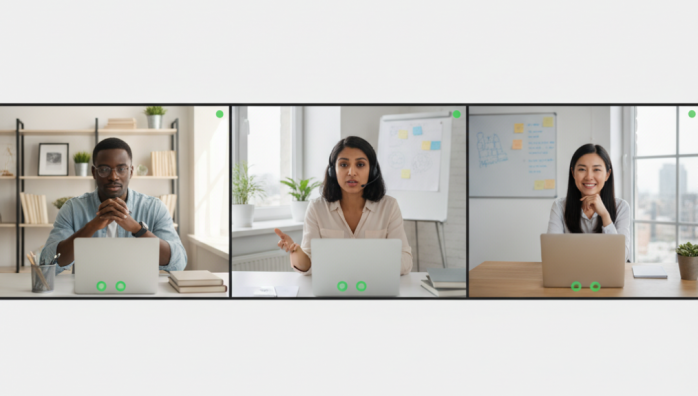
I used to dread looking at my calendar. It was a sea of blue blocks, each one a virtual meeting promising to chip away at my focus and energy. We were \'collaborating,\' but it often felt like we were just collectively staring at a screen, waiting for someone to say, \"Okay, I think we\'re done here.\" After one particularly draining week, I realized something had to change. It wasn\'t about finding a new video conferencing tool; it was about completely rethinking my approach to the meetings themselves.
The pre-meeting ritual that changed everything
Honestly, the biggest shift for my team and me came from what we do *before* anyone clicks \'Join Meeting.\' I used to be guilty of sending out vague calendar invites with just a title. The result? People would show up unprepared, and the first 15 minutes were wasted just getting everyone on the same page. It was a disaster for productivity.
My non-negotiable rule now is this: no agenda, no meeting. But it\'s more than just a list of topics. I learned to frame it as a set of questions we need to answer or decisions we need to make. This simple change transformed the agenda from a passive document into an active contract for the meeting.
- Clear purpose: Every invite must state the meeting\'s desired outcome. Not \"Discuss Q3 plan,\" but \"Decide on the top 3 marketing initiatives for Q3.\"
- Required pre-reading: If there are documents to review, I send them at least 24 hours in advance. The meeting is for discussion, not for reading together.
- The right guest list: I started asking, \"Who is absolutely essential for this decision?\" This drastically cut down on attendees, which in turn made the conversations more focused.
Keeping energy and focus high during the call
The \'Zoom fatigue\' we all talk about is real. I\'ve found it\'s not just about the screen time; it\'s about passive listening. To combat this, I had to become a more active facilitator, and I encourage others on my team to take on that role too. It\'s not about being a boss; it\'s about being a guide.
My go-to engagement tactics
First, I always start on time and with a quick, two-minute check-in. It helps everyone arrive mentally. Then, I rely on structured participation. Instead of a free-for-all, I might use a round-robin approach, asking each person for their input on a specific topic. This prevents the same two people from dominating the conversation. I also make a point of explicitly assigning roles at the start: one person is the designated timekeeper, and another is the notetaker. This shared responsibility keeps everyone invested.
The post-meeting habit that actually drives action
This was my \'aha\' moment. For years, meetings would end, and the conversation would just vanish into the digital ether. Decisions were fuzzy, and action items were forgotten. The solution was embarrassingly simple, but it required discipline.
Within an hour of the meeting ending, the designated notetaker sends out a very brief summary email. I follow a strict format:
- Decisions Made: A bulleted list of what was agreed upon.
- Action Items: A simple list with two columns: the specific task and the owner\'s name.
- Deadline: When each action item is due.
That\'s it. This simple follow-up acts as a public record of our commitments. It has single-handedly eliminated the \"I thought someone else was doing that\" problem. It turns a conversation into forward momentum, which, I\'ve learned, is the only true measure of an efficient meeting.