Balancing Raw Meals for Puppies
by admin in Pet Care Basics 89 - Last Update December 3, 2025
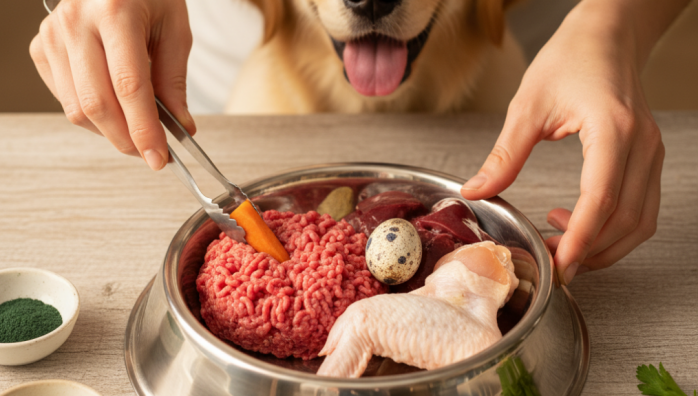
When I first brought my puppy home, I was committed to the idea of a raw, species-appropriate diet. I’d seen the benefits in adult dogs and was excited. But honestly, the weight of responsibility felt immense. I wasn\'t just feeding a dog; I was building the foundation for a long, healthy life, and the thought of getting it wrong for a growing puppy was terrifying. The internet was a swirl of conflicting advice, and for a while, I felt completely lost.
The learning curve of puppy proportions
The first concept I latched onto was the popular 80/10/10 ratio—80% muscle meat, 10% edible bone, and 10% organ meat. It sounded simple enough, but I quickly learned it\'s more of a general guideline for adult dogs than a strict rule for puppies. Puppies are growing at an incredible rate, and their nutritional needs, especially for calcium and phosphorus, are much more demanding. My initial attempts felt like a high-stakes chemistry experiment, and I was constantly second-guessing myself.
Getting the balance right took time
It took a lot of research and careful observation to find a rhythm. I realized I needed to stop aiming for perfect balance in every single meal and instead focus on achieving it over the course of a week. This shift in perspective was a game-changer for my stress levels.
The core components of my puppy\'s raw meals
Here’s a breakdown of what I learned to focus on, based on my own trial and error. Remember, this is my personal experience, and I always recommend working with a vet or a certified canine nutritionist to tailor a diet for your specific puppy.
Muscle meat: the engine
This is the cornerstone, providing protein and essential amino acids. I learned early on that variety is key. I rotate between different proteins like chicken, beef, turkey, and lamb. This not only keeps my puppy interested but also provides a wider range of nutrients. I started with ground meats to make them easier for a small puppy to handle.
Raw meaty bones (RMBs): for structure and growth
This was the scariest part for me. The idea of giving a tiny puppy bones was nerve-wracking. I started with soft, fully edible bones like chicken wings and necks. These are crucial for providing the right balance of calcium and phosphorus. It\'s not just about the minerals; the act of chewing is fantastic for their dental health and mental stimulation. The most important rule I live by is to *never, ever* feed cooked bones, as they can splinter and cause serious harm.
Organ meats: nature\'s superfoods
I think of organ meats as the diet\'s multivitamin. Liver is non-negotiable for its vitamin A content, but you have to be careful not to overdo it as it can cause loose stools. I follow a rule where about half of the organ portion is liver, and the other half is a rotation of other secreting organs like kidney, spleen, or pancreas.
The little extras that make a big difference
Beyond the basic ratios, I incorporated a few other things to round out the diet. I add in whole sardines or fish oil a few times a week for those vital Omega-3 fatty acids, which are fantastic for brain development and coat health. A raw egg here and there is also a great nutritional boost. My journey into raw feeding a puppy was a steep learning curve, but seeing him thrive—with a shiny coat, clean teeth, and boundless energy—has made every moment of research and careful preparation worth it. The key for me was to start simple, observe my puppy closely, and not be afraid to seek professional guidance when I needed it.









